The District’s Transportation System Taxes Everyone’s Time
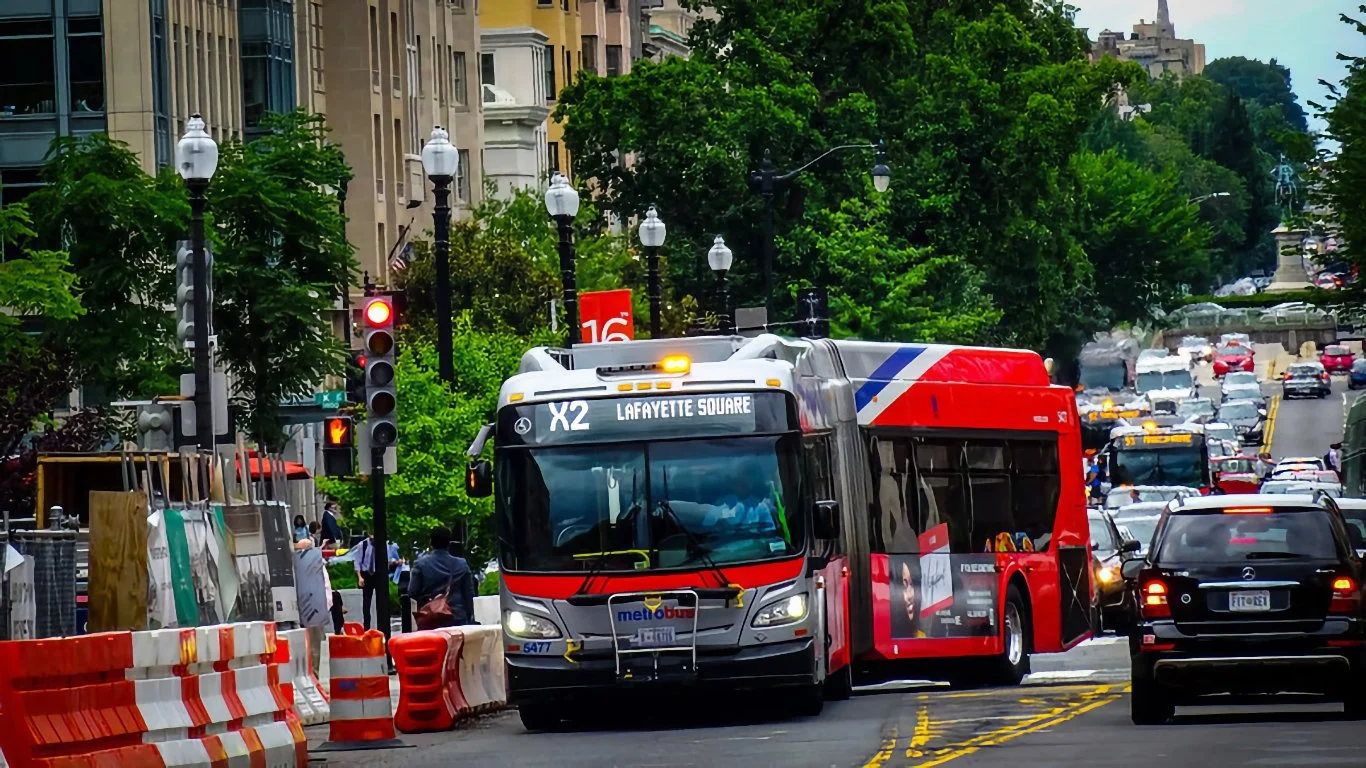
Image via Greater Greater Washington.
In a city where close to 40 percent of households do not have a car, the District limits the choices residents have about how and where they can work, go grocery shopping, access healthcare, recreate, and see loved ones. District residents pay a “transportation time tax” — the length by which public transit trips are longer than car trips because our transportation system prioritizes driving over all other forms of transportation.
While transit riders are disproportionately harmed by the time tax, everyone—including drivers—is forced to spend more time getting to their destinations because we’ve constructed our transportation systems to be inefficient, dangerous, unfair, and costly. District leaders and employees should view reducing the transportation time tax on all road users as a north star when making decisions that affect our transportation systems.
The DC Transportation Equity Network, a cross-sector coalition of direct service, advocacy, and labor organizations coordinated by GGWash, collaboratively developed this concept as a guiding principle for our advocacy. Equity in transportation means different things to different people, but the transportation time tax encapsulates one of the core inequities that reflects how different communities’ mobility needs are—or are not—prioritized based on the amount of time it takes to get to key destinations using different modes of transportation.